
Harrison Projected and Actual Dates
A projected date is a calculation based on sentence data and the rules that apply to that offender. MDOC uses the public label Tentative Release Date. It also calculates an Earned Release Supervision date and a maximum release date. These figures serve different purposes. None is a release certificate, and none should be relabeled as the actual exit date.
County cases take another path. Someone awaiting trial at the Harrison County Adult Detention Center may leave after bond, a court order, dismissal, transfer, or another event. There may be no fixed date in advance. A person serving a local sentence may have a calculable end date, but the sheriff and sentencing court hold the key records. The statewide MDOC field applies only when an MDOC sentence or placement is involved.
- Tentative Release Date
- MDOC's public projected date field, subject to the controlling sentence and applicable rules.
- ERS date
- A possible start of Earned Release Supervision, a community phase under MDOC jurisdiction.
- Maximum release date
- The agency's maximum-term calculation, distinct from parole or ERS eligibility.
- Detainer
- A request or hold from another authority that may prevent community release.
Find Harrison Projected Release Dates
Begin with custody type, not a name search alone. The MDOC Inmate Search accepts a first name, last name, or MDOC ID. It is useful for state sentences and some ERS cases. It is not a record of every person who leaves the Harrison County jail. A county detainee who bonds out or receives time served without entering MDOC may never appear there.
- Confirm the person's full name, date of birth, likely facility, case number, and MDOC ID if one exists.
- For an MDOC case, search by ID when possible. Open the matching result only after comparing identity fields.
- Record Tentative Release Date with Location, Unit, Location Change Date, Entry Date, Total Length, and each listed sentence.
- For a county sentence or pretrial case, call Harrison jail records and obtain the sentencing or release order from the proper court.
- Ask MDOC Records for the offender time computation when the online date is blank, unclear, or inconsistent with the sentence documents.
- On or after the date, check the parolee search or ERS location and request the actual release or discharge record.
A populated MDOC result illustrates how the official label appears. The official tentative-date example is an illustrative state record, not a Harrison County release.
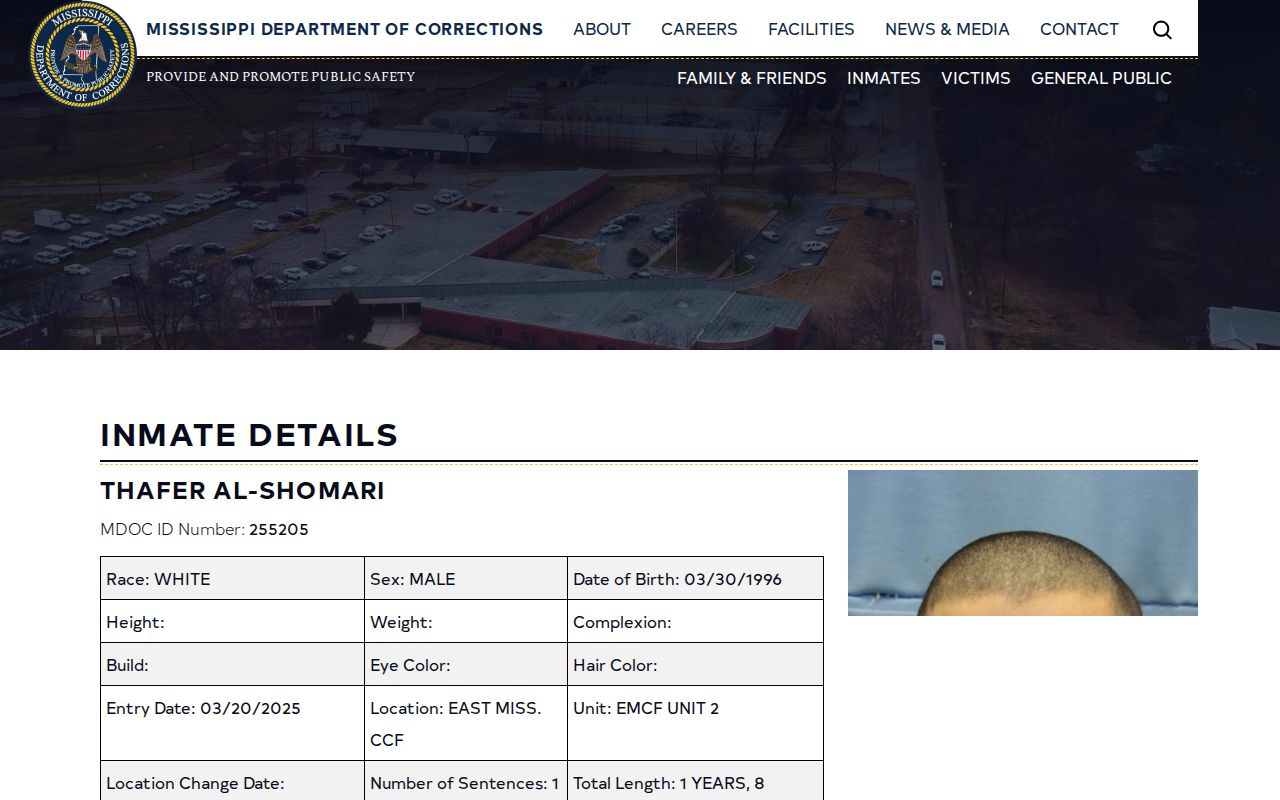
The field should always be read with the sentence and current location fields visible on the same MDOC detail.
Harrison Release Dates and Earned Time
MDOC cites Miss. Code Ann. § 47-5-138 for Earned Release Supervision and earned-time rules. Its community-supervision explanation gives an example for an offense committed on or after July 1, 1995: an eligible offender may have to serve 85 percent in a facility and may serve the last 15 percent on ERS. That example is the source of a common shorthand, but it is not a safe universal formula.
Offense type, offense date, sentence structure, jail credit, statutory exclusions, loss of earned time, parole rules, and classification review can change the calculation. The controlling version of the statute is the version that applies to the offense and sentence. Simply multiplying the pronounced term by 0.85 can create a false date. MDOC Records, not private arithmetic, supplies the official time computation.
ERS is still MDOC jurisdiction. It is physical community placement, not full discharge. Near the ERS date, MDOC says the proposed residence must be reviewed. The agent may inspect it and meet household members. An unresolved or rejected plan can keep the calculated date from producing community placement.
Note: Harrison County bond and time-served dates come from the jail and court unless the person is serving an MDOC sentence in county placement.
Why Harrison Release Dates Change
A projection can change because the legal inputs or the person's eligibility changes. Even a date that stays on the screen may pass without release if a required step remains open. MDOC lists life and habitual-offender sentences, certain offense categories, escape or attempted escape, and forfeiture of earned time among factors that may bar ERS. Its list is illustrative, not complete.
| Factor | Effect on the projected release | Confirmation source |
|---|---|---|
| Earned-time loss | May move an eligible transition later or remove an ERS path | MDOC time computation and classification record |
| Residence review | An ERS date may pass while an acceptable home plan is unresolved | Assigned probation/parole agent or MDOC |
| Detainer or hold | Custody may move to another authority instead of the community | MDOC and the named receiving agency |
| Amended court order | Sentence length, credit, or structure may change | Sentencing court and updated MDOC calculation |
| Concurrent or consecutive terms | Several sentences can run together or one after another | Judgments and offender time sheet |
| Parole action | Eligibility or a grant does not guarantee the physical release date | Parole Board action and MDOC custody record |
| Revocation | Return to custody may create a new location and time calculation | Revocation order and MDOC record |
Questions about offender time, jail credit, and eligibility dates go to MDOC Records at 601-933-2889 or MDOCRecordsDepartment@mdoc.state.ms.us. The MDOC written public-record route is required when requesting records; the agency says telephone requests are not accepted.
Three Harrison Release Date Calculations
Harrison County readers often see one date and call it the release date. MDOC's system is more precise. ERS date, tentative release date, and maximum release date answer different questions. The ERS figure concerns possible supervised community placement. The tentative field is a projected release calculation. The maximum date reflects the sentence's outer calculation. A parole eligibility date adds yet another decision point and should not be confused with any of the three.
An official MDOC example shows why location matters after physical release. The ERS community-location record remains in the inmate system even though its location identifies Earned Release Supervision.
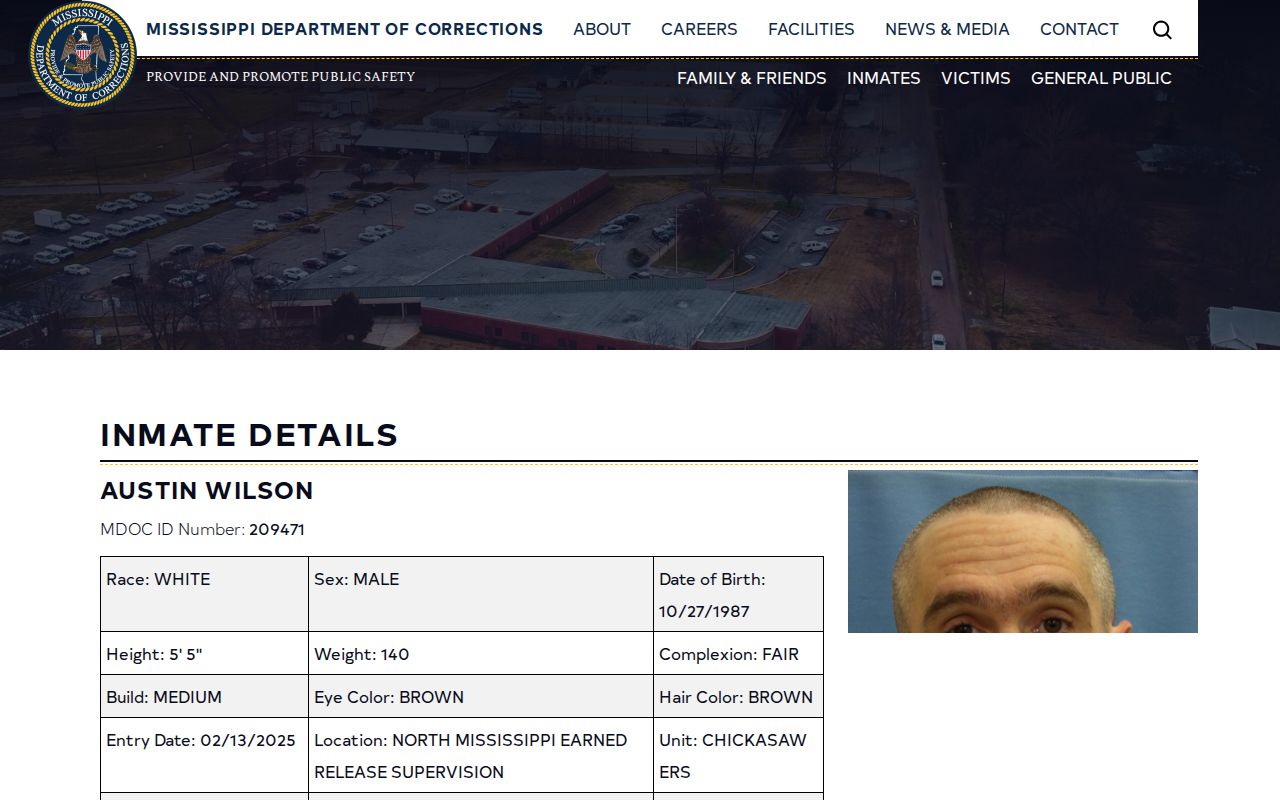
The record demonstrates continuing MDOC jurisdiction outside prison walls. It does not show full discharge.
Confirm Harrison Actual Release Dates
When the projected day arrives, check actual status. Search the MDOC parolee side. Read any ERS location. Review a VINE custody notice if registration was active, then contact the custodial agency. The Harrison County VINELink check explains alert registration and the Sheriff-to-SAVIN handoff. An alert is useful, but the underlying agency record is the documentary source.
If the MDOC field is blank, leave it blank. An official life-sentence example with no tentative value shows that the label may be present while the date is absent. Do not estimate why. Ask MDOC Records for the calculation and applicable source documents.
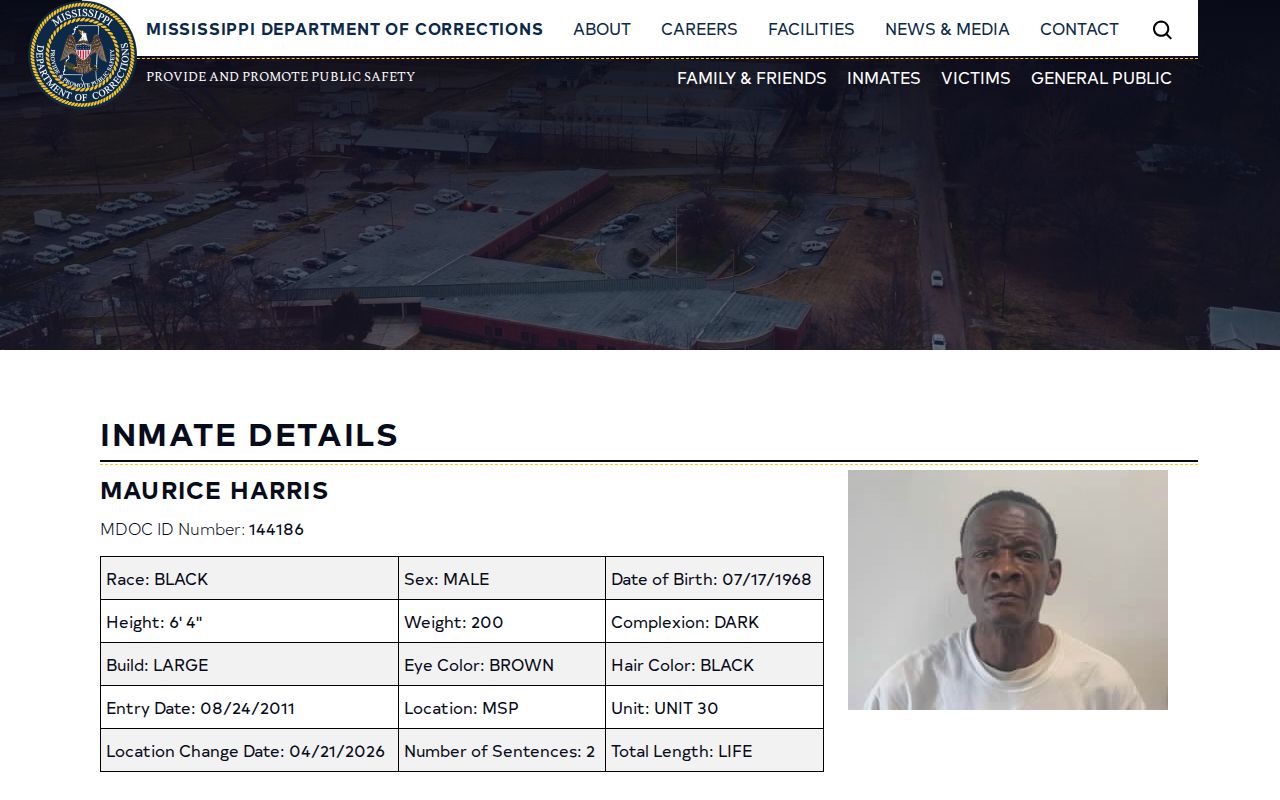
The blank field confirms that public search results do not always provide a date, even when the field label appears.
For a county-jail case, request the booking/release sheet from HCSO Public Records and the final court order. For a state case, request the offender time computation and actual discharge or status record. The Harrison County release-record process sets out how those county and state records answer different parts of the same question.
Note: A transfer out of Harrison custody is not a community release; follow the named receiving authority before describing the person's status.
Request Harrison Release Calculations
The public MDOC detail is a first view, not the full time sheet. When the date needs formal support, identify the person by full name and MDOC ID and request the offender time computation. Ask for the values and records that identify the ERS date, Tentative Release Date, maximum release date, jail credit, sentence structure, and any actual release or discharge entry. Electronic copies are easier to compare with court orders, and the written request should ask for advance notice of charges.
MDOC's public-record rule is based on the Mississippi Public Records Act of 1983, Miss. Code Ann. § 25-61-1 et seq. The statute does not promise that each requested field is public or exists. Material may be redacted or withheld under an applicable rule. The public website also gives no fixed period during which a former offender will remain searchable, so a saved ID and case number matter in an older Harrison County projected release date inquiry.
For a person held only on a Harrison County matter, direct the request to the Sheriff and the right court. The booking/release sheet can establish the actual county exit. A bond order, sentencing order, dismissal, revocation, or later order explains the legal basis. Harrison has separate Circuit, County, and Justice Court lanes, while Biloxi municipal cases may involve contracted detention placements. A jail location and the court that controls the case may not be the same office.
The Harrison County Inmate Work Center also requires care. HCSO describes it as a county and MDOC partnership holding sentenced state prisoners. A person who leaves that placement may still be an MDOC case. Follow the statewide offender result to distinguish a move to another unit, ERS, parole, or discharge. The county facility name alone does not make the sentence calculation a local-jail calculation.
Keep the dates in a small source log. Record the date the online result was checked, the exact Tentative Release Date, the Location and Unit, and any later change. Pair each entry with the court order or MDOC response that explains it. This makes it possible to tell a corrected calculation from a true custody event without guessing from an older screenshot.
A federal or immigration case is outside MDOC's tentative-date calculation. Use the BOP locator for a sentenced federal prisoner and the ICE locator for immigration custody. U.S. Marshals pretrial detention has no equivalent nationwide public locator, so the federal docket and responsible district contact become necessary. Absence from one system never resolves all custody.
When several sentences appear, ask whether they run concurrently or consecutively. Concurrent terms run at the same time; consecutive terms run one after another. That distinction can alter the maximum and tentative calculations even when each individual sentence is copied correctly. Jail credit and amended orders can also change the starting data, so the most recent signed order and MDOC calculation should be compared.