
Biloxi Municipal Release Path
The Biloxi municipal detention pathway is not a separately verified long-term city jail. Biloxi Police and Biloxi Municipal Court handle the local arrest and case, but detention can occur through a contract facility. An official March 2024 city agenda authorized housing at Harrison County Adult Detention Center and also documented an agreement among Biloxi, Harrison County, and Stone County for use of Stone County Regional Correctional Center through 2028. The arresting city, court, and physical jail may therefore be three distinct parts of the same case.
A person may leave the actual jail after bond, time served, a court order, or another lawful release. The same departure may instead be a transfer between Harrison and Stone County, a move to MDOC, or another custody change. The city court record explains the legal action. The facility record supplies the booking, movement, and release timestamps. Neither source should be made to answer the other source's question.
Confirm a Biloxi Release
Begin with a full legal name, spelling variants, date of birth, approximate arrest date, and any case or booking number. Then identify where the person was housed. The Harrison Sheriff inmate search checks current HCADC listings. It is not a Biloxi release archive. A result supports current Harrison listing at the time checked, while a missing result leaves release and transfer unresolved.
Use a source-by-source sequence so the conclusion follows the records:
- Search the current Harrison roster and record the time, exact spelling, and identifiers used.
- Ask Biloxi Municipal Court for the case number, bond or custody order, and final disposition.
- Request booking, transfer, and release timestamps from the facility that actually housed the person.
- Check Mississippi VINE for a reported custody change tied to the same person and agency.
- If a record names Stone County, MDOC, or another receiver, continue with that custodian before calling the event a release.
The Harrison County released-inmate record path provides the broader county, state, VINE, court, and federal sequence. For a Biloxi case, the key extra step is establishing the contract jail before asking for a release sheet.
Biloxi Court and Custody Records
Biloxi Municipal Court controls the municipal case even when the defendant is housed elsewhere. A bond order, dismissal, time-served judgment, sentence, or other filed action explains why a person could leave custody. It does not prove the exact time the jail completed release processing. Conversely, a jail record can show transfer out without explaining the final result in court. The two records should be matched by name, date, case number, and booking details.
The city's official account of its video-arraignment program documents Biloxi judges arraigning people housed at Harrison County jail. The program shows why a reader should not infer court location from jail location. Arraignment is an early hearing, not a release decision or final disposition. Later orders must be obtained from the court record, and the actual custodian must confirm when the person left its control.
Note: Ask the clerk for the signed order or final disposition, not only a calendar entry showing that a hearing was scheduled.
Request Biloxi Release Records
Once HCADC is confirmed as the custodian, direct the custody-record request to the Harrison County Sheriff's Public Records Division. Identify the Biloxi defendant and approximate arrest period. Ask for the booking date and time, transfer dates, release date and time, recorded release type or destination, charges, bond entries, and booking photograph if public. If the response says the person went to Stone County, the Harrison record establishes only the county-to-county movement. Request the later custody endpoint from Stone County.
The research found no fixed Harrison booking-sheet fee, photo fee, or guaranteed response interval. Request a cost estimate and electronic delivery options. Do not ask only whether the person is still housed, because that can produce a present-status answer instead of the past event record.
HCSO Public Records Division
P.O. Box 1480
Gulfport, MS 39502
Phone: 228-896-0626
Fax: 228-896-0625
Hours: Monday through Friday, 8:00 a.m. to 5:00 p.m.
If HCADC was not the custodian, do not send the request there merely because Biloxi lies in Harrison County. Use the Biloxi housing information and court record to identify the actual facility, then address the release request to that records custodian.
Biloxi Release Housing Network
The local facility angle is a network rather than one building. HCADC was built in 1990 with a stated design capacity of 760, and HCSO later reported an average daily population of roughly 800 to 900 after population-management efforts. Harrison also operates a separate Work Center with MDOC assistance for about 140 to 160 sentenced state prisoners. Those facts describe different custody roles. They do not turn the Work Center into a Biloxi municipal jail or prove where any one defendant was held.
The 2024 Biloxi agreements add Stone County as another verified housing option for municipal detainees. This structure makes a one-system search unreliable. A Biloxi arrest may lead to HCADC, Stone County, or a later state placement depending on the order and custody history. The correct release record comes from the facility holding the person at the time of the event. The Biloxi court file stays with the municipal case even if the person changes facilities.
| Source | What it answers | Limit |
|---|---|---|
| Biloxi Municipal Court | Bond, judgment, sentence, and case disposition | Not the physical exit time |
| HCADC record | Harrison booking, movement, or release event | May end at a transfer |
| Stone County record | Custody event while housed there | Separate custodian and request |
| MDOC record | State commitment, placement, or supervision | Not every municipal release |
Biloxi Video Arraignment Records
The successful manifest image comes from Biloxi's official video-arraignment account. That source demonstrates a real operational link between Biloxi Municipal Court and people housed at the Harrison County jail. It does not show a release list, a current roster, or a person's final case result. It documents split court and facility responsibility.
The Biloxi video-arraignment source is pictured below.
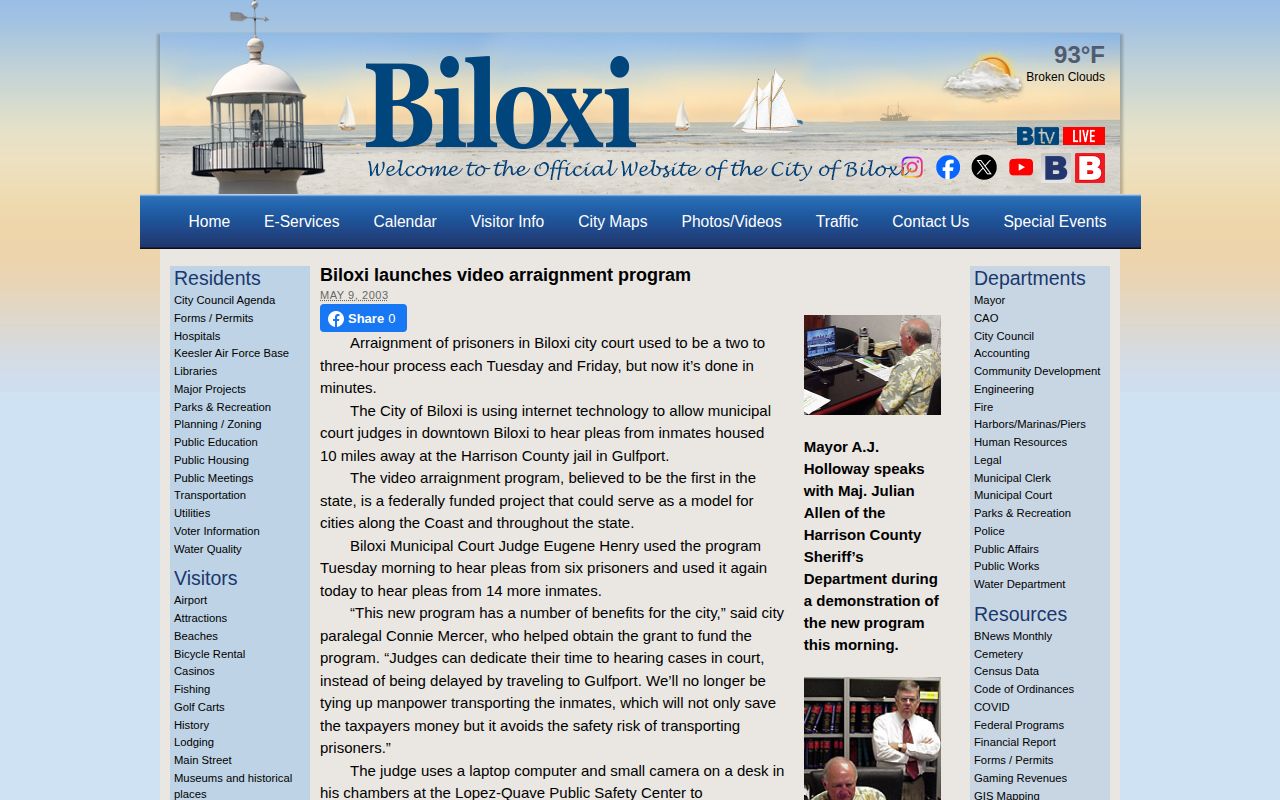
The image supports the court-to-jail connection. A reader still needs the later Biloxi order and the jail's release or transfer record to establish what happened after arraignment.
- Arraignment
- An early court hearing where charges and pleas are addressed; it is not a final release record.
- Bond
- A form of pretrial release that allows the case to continue outside jail after processing.
- Transfer
- A move from one custodian to another, not a return to the community.
- Disposition
- The recorded court outcome, such as dismissal, plea, judgment, or sentence.
Biloxi Released or Transferred
A community release should be supported by a custody record showing release, not merely departure from HCADC. If the record lists Stone County, MDOC, federal custody, or another agency as the destination, the person remained in custody after leaving Harrison. Mississippi VINE may send a release or transfer notice based on agency data, but it is a prompt to verify. The supplying jail retains the documentary record.
MDOC becomes relevant if the Biloxi case results in a state commitment or the person moves into a state placement. An MDOC offender detail can show Location, Unit, sentence data, and a Tentative Release Date. A parolee record can show community supervision. Neither system is an archive of every person who bonded out of a Biloxi municipal case. Federal BOP and ICE tools are likewise narrow, sovereign-specific paths used only when the custody facts point there.
State the conclusion with care: “released from HCADC to Stone County” describes a transfer out of Harrison custody, while “released to the community” describes a different event. When the destination field is withheld or unclear, report that the Harrison custody endpoint is confirmed but the later status remains unresolved.
Biloxi Release Search Limits
No official Biloxi 24-hour or 72-hour release feed was verified. HCSO publishes a current-custody JailTracker, not a rolling municipal release archive. It also gives no exact refresh interval or public retention period for people who leave the live search. Biloxi's meeting agenda and video-arraignment material explain the housing arrangement, but neither serves as a person-search database.
These gaps make a narrow records request more useful than repeated roster checks. Name the person, the date range, the Biloxi case if known, and the facility believed to have housed the person. Ask for the release or movement event and its destination. Where the custodian cannot be identified, begin with Biloxi Municipal Court's case record and HCSO's current roster, then follow the housing trail one record at a time.
Note: No separate long-term Biloxi jail was verified, so the facility holding the person must be established for each custody episode.